








Contemporary Ideas for Transforming Tired Garden Walls and Boundaries
Garden walls and fences often occupy a surprisingly large part of the view from a home. Yet when an outdoor space is refreshed, attention commonly goes first to paving, furniture and plants. The boundaries remain exactly as they were, even when they provide the backdrop to everything else.
Giving these surfaces some thought can change the character of a garden without requiring a complete redesign. Texture, greenery, colour and lighting can turn an ordinary boundary into a deliberate feature, whether you have a compact Exeter courtyard or a larger Devon garden.
Use Texture to Create a Feature
Large expanses of plain fencing or masonry can make an outdoor space feel flat. Adding texture creates contrast and gives the eye somewhere to settle.
Timber battens and trellis are familiar choices, particularly when paired with planting. Decorative screens can introduce pattern, while rendered sections can provide a smooth contrast beside rough brick or natural stone.
For a more structured appearance, composite slatted cladding boards are another decorative approach for an appropriate outdoor wall or boundary. The repeated lines can create a contemporary backdrop behind seating, planting or a dining area.
Covering an entire boundary is rarely necessary. Concentrating on one section can provide greater impact while keeping the project manageable. Before attaching any material, check the condition and ownership of the existing wall or fence, along with any relevant planning or property restrictions.
Introduce Greenery at Different Heights
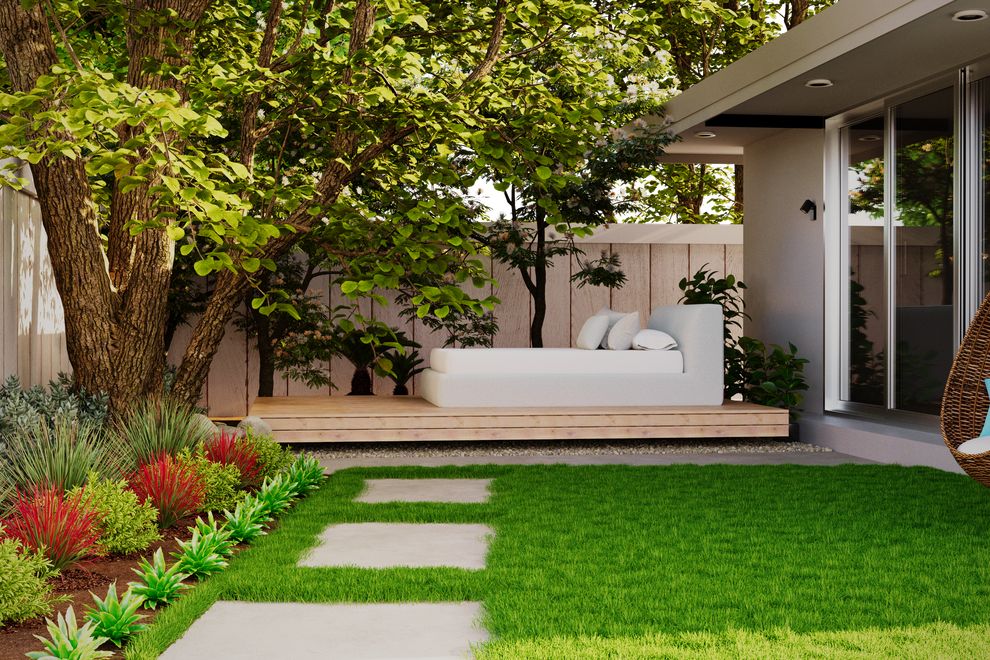
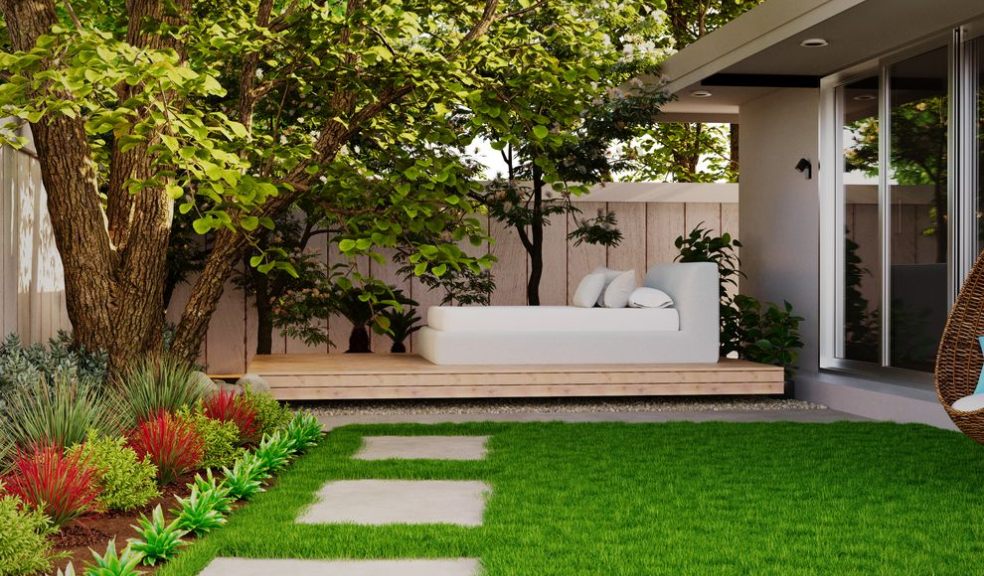
Plants can soften hard surfaces and help boundaries feel connected to the rest of the garden. Instead of keeping all greenery at ground level, use several heights.
Climbing plants can cover sections of fencing, trellis or masonry over time. Choose varieties suited to the amount of sunlight and shelter available, and check how large they are likely to become before planting. Some vigorous climbers require regular pruning.
Wall-mounted planters can bring greenery higher up without taking much floor space. This can be particularly useful in smaller gardens where large borders would reduce the usable area.
Another option is to position pots of different heights along a boundary. Combining low planting with taller shrubs or grasses creates depth and can disguise less attractive sections without permanently covering them.
Use Colour to Change the Character of the Space
Colour can alter how a boundary relates to the rest of the garden. Deep greens and charcoal shades can form dramatic backgrounds for foliage, while softer neutrals can give a lighter, calmer appearance.
Natural shades often sit comfortably alongside timber, stone and terracotta. If you prefer stronger colour, consider using it on one feature section rather than every fence panel.
Look at the colours already present before choosing a new finish. Garden furniture, paving, exterior doors and window frames can provide useful starting points. Repeating one or two shades elsewhere, perhaps through pots or cushions, can help separate areas feel connected.
Always choose paints and finishes designed for the relevant exterior material. Preparation also matters, particularly when working with older timber or previously painted surfaces.
Add Lighting for Evening Impact
A boundary that looks attractive during daylight can become an effective backdrop after sunset with carefully positioned lighting.
Rather than flooding the whole garden with bright light, concentrate on selected features. A gentle light directed towards textured material can emphasise its surface, while lighting near a favourite plant can create interesting shapes and shadows.
In a smaller garden, restraint is particularly useful. Too many bright fittings can make the area feel harsh and may cause unnecessary disturbance to neighbours and wildlife. Choose exterior-rated fittings and consider warm, lower-level illumination around social spaces.
Electrical installations outdoors must be suitable for exterior conditions, with work completed by an appropriately qualified professional where required.
Garden boundaries do not have to disappear behind everything else. Treating a wall or fence as part of the design gives you another opportunity to introduce texture, colour, greenery and light. Whether you update one small section or rethink several surfaces, a considered boundary can change the appearance and atmosphere of the whole garden.