








Fire Suppression Systems in UK Buildings: Understanding Alarm Check Valves and Why They Matter for Property Owners
For property owners, landlords, and facilities managers across the UK, fire safety compliance is a legal obligation that extends well beyond fitting smoke alarms and conducting annual fire risk assessments.
Commercial buildings, residential blocks, educational facilities, and healthcare premises are all subject to requirements under the Regulatory Reform (Fire Safety) Order 2005 that demand properly designed, installed, and maintained automatic fire suppression systems where the risk profile of the building warrants them.
Understanding how these systems work — and in particular, the role of the components that control and monitor water flow — is practical knowledge that helps property stakeholders make better decisions about their fire protection obligations.
How Automatic Sprinkler Systems Actually Work
The automatic sprinkler system is the foundational technology of commercial fire suppression in the UK and globally. Its operating principle is straightforward: a network of water-filled pipes runs throughout the protected space, with individual sprinkler heads positioned at regular intervals.
Each head contains a heat-sensitive element, typically a glass bulb filled with a thermally expansive liquid that holds the head closed under normal conditions. When the ambient temperature at a head's location rises to its rated activation threshold, typically 68°C for standard response heads, the element fails, and the head opens, releasing water directly onto the developing fire below.
This activation is automatic, requires no human intervention, and typically occurs within the first few minutes of a fire developing, long before fire service personnel can arrive on scene.
The statistical record of sprinkler system performance in the UK and internationally consistently demonstrates that systems activate successfully in the overwhelming majority of fire events in protected buildings, controlling or suppressing fires before they cause the kind of total loss that unprotected buildings experience.
The Alarm Check Valve: The System's Control Centre
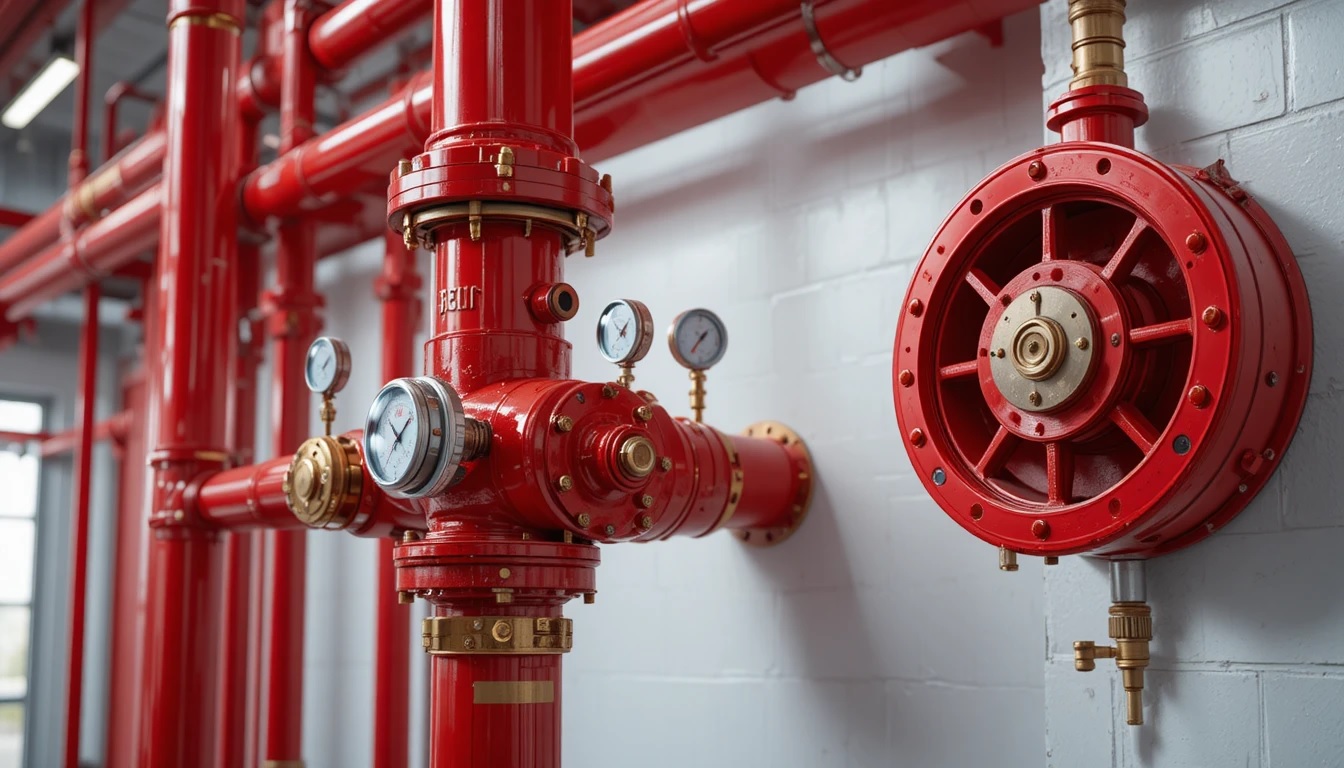
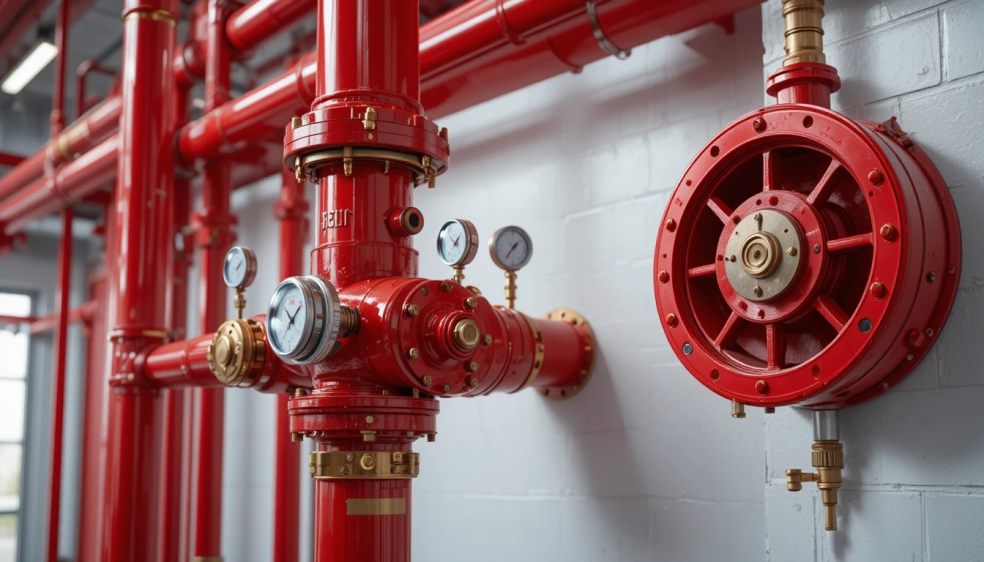
Within any wet-pipe sprinkler installation, the alarm check valve is among the most critical components, yet it is one that many building owners and facilities managers have never heard of. Positioned between the incoming water supply and the sprinkler distribution network, this device performs two essential simultaneous functions that are fundamental to the system's reliable operation.
The first function is backflow prevention. The alarm check valve ensures that water can only flow in one direction, from the supply into the sprinkler network, preventing contamination of the mains supply and maintaining system pressure in standby conditions. This function operates continuously, every day the building is in use, without generating any visible indication that anything is happening.
The second function is alarm activation. When a sprinkler head opens during a fire event, water begins flowing through the distribution network. This flow creates a pressure differential across the alarm check valve's internal mechanism, which opens and routes a portion of the flow to the alarm port.
From there, the flow drives both a water motor gong, a purely mechanical alarm device that operates without electricity, and an electric pressure switch connected to the building's fire alarm panel. This dual-path alarm mechanism ensures that suppression activation generates an audible alert and an electronic signal simultaneously, even if the building has a power failure at the time of the fire.
For UK property managers evaluating whether their installed alarm check valves are appropriate for the system and building type, several technical parameters matter: the valve's rated working pressure relative to the site's water supply pressure, the body material and its compatibility with local water chemistry, the alarm port configuration and its compatibility with installed alarm devices, and whether the valve carries certification marks such as FM Approval or LPS 1039 that verify independent performance testing to recognised standards.
What Can Go Wrong: Common Failure Modes
Understanding why alarm check valves matter is easier when you understand what happens when they fail. A valve whose internal clapper mechanism has corroded or fouled may fail to seal reliably under standby pressure, allowing slow leakage that depressurises the system, triggers nuisance alarms, and requires repeated maintenance intervention.
A valve whose alarm port has become blocked may allow a sprinkler head to activate and water to flow — without triggering any alarm signal at all, leaving occupants unaware that a fire is being suppressed elsewhere in the building.
A valve that has never been serviced may have a clapper that seizes in position over time, either stuck open — which floods the system — or stuck in an intermediate position that restricts flow during an actual fire event.
Each of these failure modes is preventable through proper specification of quality components and adherence to the maintenance schedules required by BS EN 12845 for commercial systems and BS 9251 for residential installations.
Maintenance Requirements Under UK Law
The Regulatory Reform (Fire Safety) Order places a clear obligation on the responsible person typically the building owner or occupier — to ensure that fire safety systems are maintained in efficient working order and good repair.
For sprinkler systems, annual inspection and testing of alarm check valves is a minimum requirement, including verification that alarm port devices are functioning correctly and that the valve operates freely through its full range of motion.
Property owners who cannot produce documentation confirming that this maintenance has been carried out may face difficulty during fire authority inspections, insurance audits, or in the event of a fire where suppression system performance is subsequently investigated. More importantly, a system whose alarm check valve has not been maintained is a system whose reliability in an actual fire event is genuinely uncertain.
For Exeter and Devon property owners reviewing their fire protection compliance position, engaging a competent fire protection contractor to assess the current condition and maintenance history of installed sprinkler system components is a straightforward and proportionate investment.
The cost of this assessment is minimal compared to the regulatory exposure and, more fundamentally, the safety consequences of a suppression system that fails to perform when it is needed most.