









How Furniture Brands Can Improve Shopify Shopping
A sofa can look perfect on a screen and still leave a customer wondering: Will it actually work in my home?
That is one of the biggest challenges furniture brands face when selling online. Unlike smaller products, furniture is something customers often want to see, compare, and imagine in their own space before spending their money. They need to understand the size, materials, colours and available options, and they want that information without having to contact a sales team for every question.
For Shopify furniture stores, creating a better shopping experience is about more than having a good-looking website. It is about bringing some of the confidence and convenience of a showroom into the online journey.
From smarter product discovery and detailed product information to 3D visualisation and customisation, there are several practical ways furniture brands can make Shopify work harder for both their customers and their business.
Make It Easy to Find the Right Product
Furniture stores can have hundreds of products, particularly when they offer different collections, colours, materials and sizes. Without good navigation, customers can quickly find themselves clicking through page after page.
Simple categories and useful filters can make a big difference. Depending on the products being sold, shoppers may want to filter by size, colour, material, style or price.
A good search function is useful too. The less time customers spend looking for what they want, the more time they can spend considering the products that actually suit them.
Give Product Images More Attention
Photos are one of the most important parts of a furniture website.
When customers cannot visit a showroom, product photography has to do more of the work. Include images from different angles and show details such as fabric, finishes, handles, and other important features.
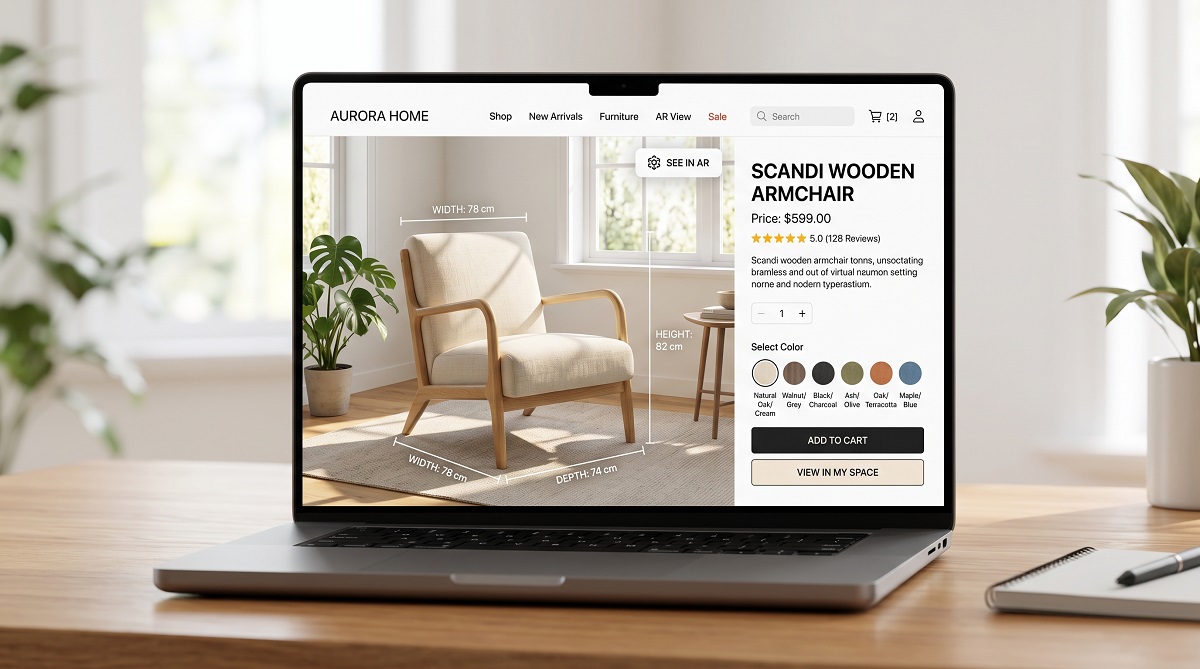
It is also worth showing furniture in a real setting. A sofa photographed in a living room or a dining table shown in a completed dining space gives customers a better idea of how the piece might look in their own home.
The goal is to give shoppers enough visual information that they feel confident moving closer to a purchase.
Make Customisation Less Complicated
Many furniture brands offer some level of customisation. Customers might be able to choose a fabric, colour, finish, size or configuration.
The problem is that a long list of options can sometimes make the shopping experience more confusing rather than more useful.
Interactive product tools can help. Instead of asking customers to imagine what their choices will look like together, brands can let them select different options and see the product change as they go.
For furniture businesses with more complex products, a 3D product configurator can make this process even more useful. Customers can explore different combinations and get a better idea of what their finished product will look like before placing an order.
This can be particularly valuable for brands selling made-to-order furniture, where customers may have many decisions to make before completing a purchase.
Help Customers Picture the Furniture at Home
One of the hardest things about buying furniture online is knowing whether it will actually look right in the customer's space.
Good photography helps, but interactive 3D visualisation gives shoppers another way to explore a product. They can look at it from different angles and, depending on the technology being used, see different configurations and finishes.
Augmented reality can take this a step further by allowing customers to visualise furniture in their own surroundings.
These tools are not going to replace a visit to a showroom for everyone, but they can make online shoppers feel more confident about what they are buying.
Keep Pricing Clear
Price can become complicated when a piece of furniture has lots of options.
A sofa may cost one amount in a standard fabric and another in a premium material. A larger size or different configuration may change the price again.
Customers should be able to see these changes clearly as they customise a product. Showing the updated price as selections are made removes some of the guesswork and makes the purchasing process more transparent.
This is particularly important for higher-value furniture, where an unexpected cost at checkout can quickly put a customer off completing an order.
Give Customers the Information They Need
A beautiful product page is helpful, but customers also need the practical details.
Dimensions, materials, finishes, care instructions, and delivery information should be easy to find. For larger pieces, measurements are particularly important. A customer needs to know not only whether a sofa will fit in the room, but also whether it will fit through the door.
Good product descriptions should answer common questions before the customer has to ask them.
It can also help to present important information in short sections or bullet points. People browsing online do not necessarily want to read a long block of text to find one measurement.
7. Put Reviews Where Customers Can See Them
Reviews can make a big difference when someone is considering an expensive purchase.
Customers can learn from other people's experiences, including comments about quality, comfort, appearance, and delivery. If customers are able to upload photographs with their reviews, even better. These images can show what the furniture looks like in an ordinary home rather than a carefully prepared showroom.
Reviews do not have to replace professional product photography, but they can add another layer of reassurance for someone who is still deciding whether to buy.
Don't Overlook the Mobile Experience
A Shopify store needs to work just as well on a phone as it does on a desktop.
Someone might discover a furniture brand through social media, visit the product page on their phone, and decide to buy without ever switching to a computer.
Images should load properly, menus should be easy to navigate, and customers should be able to select product options without struggling with a small screen.
It is worth testing the complete shopping journey on different devices. Small problems that seem insignificant on desktop can become frustrating when shopping on mobile.
Keep the Checkout Straightforward
Once a customer has found and customised a product, the last thing a furniture brand wants is for them to abandon their cart because checkout is too complicated.
Keep the process as simple as possible and make important information clear. Customers should know the available payment options, delivery costs, estimated delivery times and return conditions before they complete their purchase.
Furniture deliveries can be more complicated than deliveries for smaller products, so setting expectations early is particularly important.
A straightforward checkout also gives customers one less reason to reconsider a purchase they were already prepared to make.
Choose Apps That Actually Improve the Store
Shopify has a large selection of apps, but that does not mean a furniture brand needs to install dozens of them.
The right tools should solve a problem or improve part of the customer journey. A store with a large catalogue may benefit from better search and filtering. A brand selling made-to-order furniture might get more value from product customisation and 3D visualisation.
For businesses researching Shopify apps for furniture ecommerce, it makes sense to start by looking at where customers are experiencing difficulties and then choose tools that address those specific areas.
There is also a practical reason not to go overboard. Too many apps can make a store harder to manage and, depending on how they are implemented, can affect its performance.
The best setup is not necessarily the one with the most apps. It is the one where each tool has a clear purpose and makes the buying journey easier.
Making Online Furniture Shopping More Useful
There is no single feature that will suddenly turn a furniture store into a great ecommerce experience.
Instead, it is usually a combination of improvements. Customers need to be able to find products easily, see them clearly, understand their options, and get answers to the questions they would normally ask in a showroom.
For furniture brands, technology can help bridge some of the gap between shopping online and visiting a physical store. Better product images, 3D visualisation, customisation tools, reviews and clear product information can all give customers more confidence.
Shopify provides the foundation, but the experience ultimately comes down to how well a brand uses the tools available to it. When an online store makes it easier for customers to understand, customise and compare furniture, buying a new piece for the home becomes a much more comfortable decision.
And that is what a good ecommerce experience should do: make customers feel confident enough to click “buy.”
Gallery