








Understanding the Role of Rope Grabs in Personal Fall Protection Systems
Working at height remains one of the highest-risk activities across construction, industrial maintenance, utilities, telecommunications and many other sectors. Choosing the right rope grabs is an important part of building an effective personal fall protection system, as these devices help workers remain safely connected while moving along a vertical lifeline. While modern personal fall protection systems combine multiple components to reduce the risk of serious injury, their effectiveness depends on every element functioning together as intended. Among these components, rope grabs play a vital role by allowing workers to move safely along a vertical lifeline while remaining continuously connected to the fall protection system.
Rather than serving as standalone devices, rope grabs are designed to operate as part of a complete system that typically includes an anchorage, a vertical lifeline, a full body harness and compatible connectors. As the user ascends or descends, the rope grab travels with them under normal movement but rapidly locks onto the rope if a fall occurs, helping to arrest the fall in a controlled manner. Understanding how rope grabs function within the wider personal fall protection system is essential for selecting appropriate equipment, ensuring compatibility between components and maintaining safe working practices.
At SecureHeights, we supply a comprehensive range of rope grabs and other certified fall protection equipment from leading manufacturers, supporting customers across construction, industrial maintenance, utilities, confined space operations and other sectors where safe work at height is essential. This guide explains how rope grabs work, the different types available and the key factors to consider when selecting compatible equipment for your fall protection system.
What Is a Rope Grab?
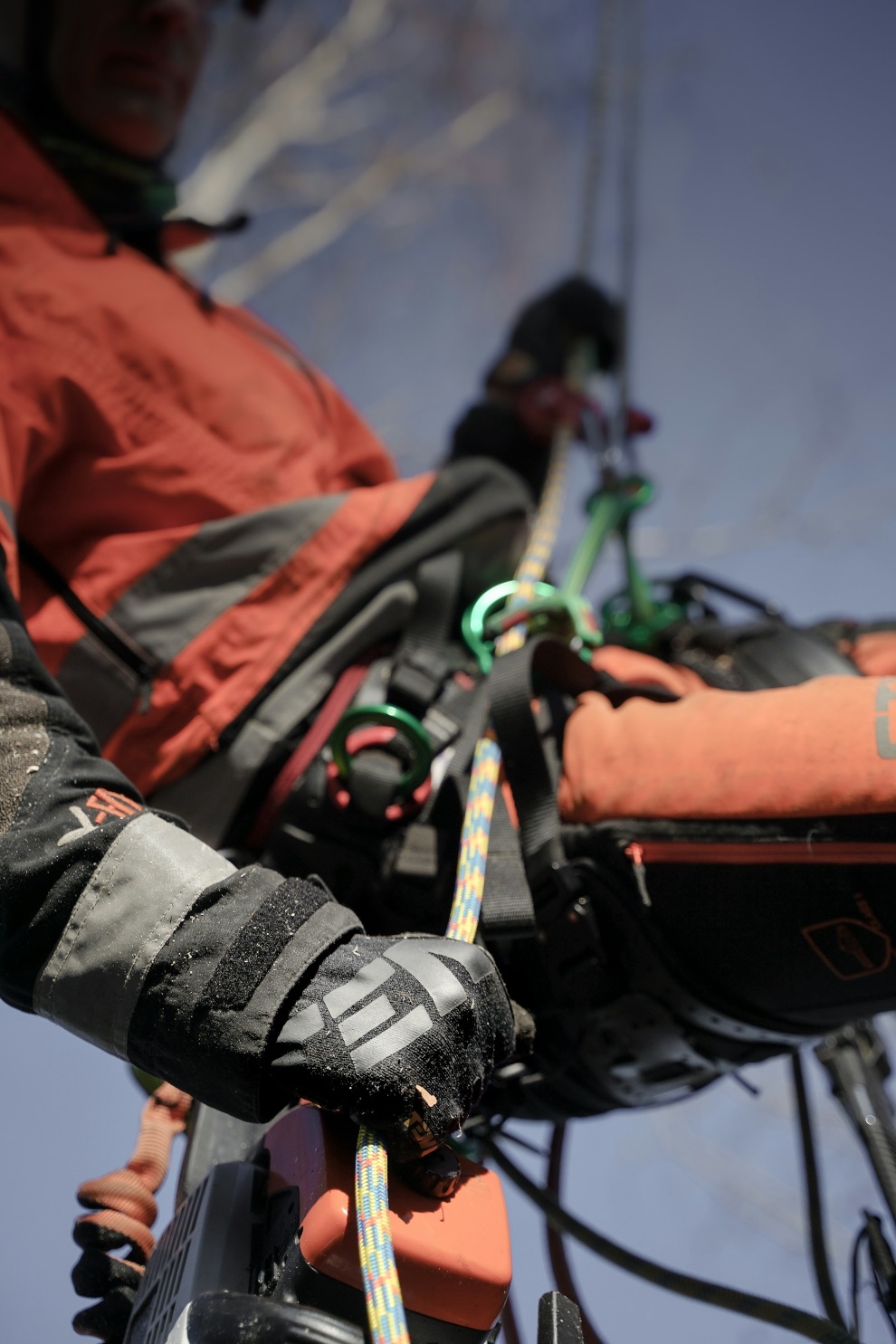
A rope grab is a mobile fall protection device that travels along a flexible vertical lifeline while remaining connected to a worker's full body harness. Its primary purpose is to provide continuous protection during vertical movement by allowing the user to climb or descend without repeatedly disconnecting from the fall protection system. Rope grabs are widely used in applications such as ladder access, tower climbing, industrial maintenance, construction and rope-based work where safe movement along a vertical route is required.
Under normal working conditions, the rope grab moves freely along the lifeline as the user changes position. If a sudden downward movement caused by a slip or fall is detected, the device rapidly locks onto the rope to arrest the fall. Depending on the type of equipment and system configuration, the rope grab may be used together with an energy absorber to help reduce the forces generated during fall arrest.
Unlike a harness, which secures the worker, or an anchorage, which provides a fixed attachment point, a rope grab is an active component that moves with the user throughout the task. It continuously connects the worker to the vertical lifeline while automatically responding if a fall occurs. This ability to combine mobility with automatic fall arrest distinguishes rope grabs from other fall protection components, each of which performs a different but equally important role within the overall safety system.
How Rope Grabs Work in Personal Fall Protection Systems
A rope grab is designed to operate as part of an integrated personal fall protection system in which every component contributes to the overall level of safety. The device cannot provide effective protection on its own. Instead, it relies on compatible equipment that has been selected to function together as a complete system.
During normal work, the rope grab travels along the vertical lifeline as the user moves. It remains connected to the full body harness by a compatible connector and, where required, an energy absorber. This arrangement allows continuous attachment throughout the task while giving the worker the freedom to climb, descend or reposition safely.
If a fall occurs, the rope grab immediately locks onto the vertical lifeline to arrest the user's movement. The anchorage transfers the resulting loads to a secure structural point, the harness distributes arrest forces across the body, and the energy absorber, where fitted, helps reduce the forces generated during the fall. Because these components work together, the effectiveness of the entire system depends on correct equipment selection, compatibility and proper use.
|
System Component |
Function |
|
Anchorage |
Provides a secure attachment point |
|
Vertical lifeline |
Supports safe vertical movement |
|
Rope grab |
Travels with the user and arrests a fall |
|
Full body harness |
Distributes arrest forces |
|
Connector |
Joins compatible system components |
|
Energy absorber (where applicable) |
Helps reduce arrest forces |
As the table demonstrates, a rope grab performs only one function within a wider fall protection system. Safe working at height depends on every component operating together as intended, with equipment that is compatible, correctly installed and used in accordance with the manufacturer's instructions. Selecting the right combination of components is therefore just as important as choosing the rope grab itself.
Different Types of Rope Grabs
Rope grabs are available in several designs, each intended for specific working methods, lifeline configurations and operational environments. Selecting the appropriate type depends on factors such as the direction of movement, the nature of the work, the required level of mobility and the overall fall protection system.
Manual Rope Grabs
Manual rope grabs require the user to reposition the device as they move along the lifeline. They are commonly used for work positioning and vertical travel where movement is controlled and frequent adjustments are not required. Because they rely on manual operation, users should ensure the device is correctly positioned throughout the task.
Automatic (Self-Locking) Rope Grabs
Automatic rope grabs, sometimes referred to as self-locking rope grabs, move freely along the vertical lifeline during normal movement and lock automatically if a fall occurs. They provide continuous protection without requiring the user to reposition the device manually, making them a popular choice for ladder climbing, structural access and general work at height.
Mobile Fall Arrest Devices
Mobile fall arrest devices are designed to travel smoothly along a flexible anchor line while following the user's movement. Many modern systems incorporate advanced locking mechanisms that respond rapidly to sudden acceleration or changes in direction. These devices are widely used in industrial facilities, telecommunications, utilities, energy infrastructure and other environments where regular vertical access is required.
Rope Grabs with Integrated Energy Absorption
Some rope grabs incorporate an integrated energy absorber or are specifically designed to be used with one. During a fall, the energy absorber helps reduce the arrest forces transmitted to the worker and the anchorage system. These systems are commonly selected where fall clearance calculations, user comfort and force reduction are important design considerations.
Choosing the Right Rope Grab for Different Applications
The most suitable rope grab depends not only on the type of device but also on the working environment, access method and the design of the complete fall protection system. Factors such as the type of vertical lifeline, required mobility, potential fall distance, environmental conditions and equipment compatibility should all be considered before selecting a device.
Ladder Safety Systems
Workers using fixed ladders on buildings, towers and industrial structures typically benefit from rope grabs that travel smoothly along a permanent vertical lifeline without requiring manual adjustment. Automatic devices are often preferred because they maintain continuous protection during ascent and descent while allowing efficient movement.
Roofing and Construction Work
Construction sites often involve changing work locations, temporary anchor systems and varied access routes. Rope grabs used in these environments should be compatible with temporary vertical lifelines and suitable for the expected working conditions, including exposure to dirt, dust and changing weather.
Tower and Mast Access
Telecommunications towers, wind turbines and utility structures require extended vertical climbing where reliable mobility is essential. Rope grabs designed for long vertical travel help maintain continuous protection while reducing the need for manual intervention during ascent and descent.
Rope Access Operations
Professional rope access technicians frequently work in complex environments that require specialised equipment compatible with rope access techniques. Depending on the task, rope grabs may be used alongside ascenders, descenders and backup devices as part of a comprehensive rope access system.
Industrial Maintenance
Maintenance activities in factories, processing plants and other industrial facilities often involve repeated access to elevated equipment. Rope grabs selected for these environments should be compatible with the installed safety system while offering durability and reliable performance during frequent use.
Confined Space Entry
Confined space work frequently combines vertical access with rescue planning requirements. Rope grabs used in these applications should be compatible with the entry and retrieval system, ensuring that workers remain protected during both normal operations and potential rescue situations.
Regardless of the working environment, selecting the correct rope grab involves more than choosing a particular device. Compatibility with the vertical lifeline, harness, connectors, anchorage and any energy absorbing components is essential. Equally important are the manufacturer's recommendations, applicable standards, the working environment and the specific risks associated with the task being performed.
Rope Compatibility and System Compatibility
The effectiveness of a rope grab depends on far more than the device itself. It must be compatible with every other component in the personal fall protection system to function correctly during both normal use and fall arrest. Even if individual items are certified, combining incompatible equipment may affect system performance and compromise safety. For this reason, manufacturers specify the exact ropes, connectors and associated equipment that should be used with each device.
When selecting a rope grab, the following compatibility factors should always be verified:
-
Rope diameter and construction. Rope grabs are designed to operate with specific rope diameters and, in many cases, particular rope types and constructions. Using an unsuitable rope may prevent the locking mechanism from engaging correctly.
-
Full body harness compatibility. The rope grab should be connected only to the designated fall arrest attachment point on a compatible full body harness.
-
Connectors. Carabiners and other connectors should meet the required strength ratings and dimensions while allowing the rope grab to operate without restriction.
-
Energy absorbers. Some rope grabs are intended to be used with dedicated energy absorbers, while others form part of systems with integrated energy absorption. The correct configuration should always follow the manufacturer's recommendations.
-
System compatibility. All components should be selected as a compatible system rather than assembled from unrelated equipment. Using products that have been designed to work together helps ensure predictable performance during fall arrest.
Because rope grabs are available in different designs for different working environments, equipment should always be selected according to the intended application and the manufacturer's compatibility requirements. The SecureHeights Rope Grabs collection includes manual rope grabs, self-locking devices, mobile fall arresters and other equipment designed for a wide range of vertical fall protection systems.
Inspection and Maintenance of Rope Grabs
Routine inspection and proper maintenance are essential for ensuring that rope grabs continue to operate safely throughout their service life. In addition to periodic inspections carried out by a competent person, users should examine the equipment before every use and remove any defective device from service immediately.
Before and during use, the following checks should be carried out:
-
confirm that the rope grab is compatible with the diameter and type of rope being used;
-
ensure identification markings remain clear and legible;
-
check the body of the device for cracks, deformation, corrosion or other visible damage;
-
verify that cams, springs, locking mechanisms and other moving parts operate smoothly;
-
confirm that the rope grab travels correctly along the lifeline and locks as intended when tested in accordance with the manufacturer's instructions;
-
inspect connectors for damage, excessive wear and correct locking action;
-
look for signs of excessive wear on contact surfaces that could affect performance;
-
clean the equipment using only methods recommended by the manufacturer;
-
store the device in a clean, dry location away from chemicals, excessive heat, moisture and direct sunlight;
-
never modify the equipment or attempt repairs unless specifically authorised by the manufacturer.
Regular inspections not only help identify damaged equipment before it is used but also extend the service life of rope grabs by ensuring they are cleaned, stored and maintained correctly.
Common Mistakes When Using Rope Grabs
Many accidents involving fall protection equipment are linked to incorrect equipment selection or improper use rather than mechanical failure. Understanding common mistakes helps users recognise potential hazards before work begins.
Some of the most frequent errors include:
-
using a rope that does not match the specified diameter, construction or material;
-
installing the rope grab in the wrong orientation on the lifeline;
-
using equipment that has visible wear, deformation, corrosion or other damage;
-
combining incompatible rope grabs, harnesses, connectors and energy absorbers;
-
assuming that components from different manufacturers are automatically compatible;
-
failing to inspect equipment before use or missing scheduled periodic inspections;
-
continuing to use equipment after it has been involved in a fall without following the manufacturer's inspection or retirement requirements.
Avoiding these common mistakes begins with proper equipment selection, careful pre-use inspection and strict compliance with the manufacturer's instructions. When every component is compatible and correctly maintained, a rope grab can provide reliable protection as part of a complete personal fall protection system.

Conclusion
Rope grabs play an important role in protecting workers during vertical movement, but they are only one component of a complete personal fall protection system. Reliable fall protection depends on selecting equipment that is suitable for the specific task, ensuring compatibility between the rope grab, lifeline, harness, connectors and any energy absorbing components, and carrying out regular inspections throughout the equipment's service life. Following the manufacturer's instructions at every stage, from equipment selection to inspection and maintenance, is essential for achieving safe and reliable performance.
At SecureHeights, we provide a comprehensive range of rope and grab solutions, including manual rope grabs, self-locking rope grabs and mobile fall arrest devices from leading height safety manufacturers. Our wider product range also includes safety harnesses, anchorage systems, self-retracting lifelines, confined space equipment, davit systems and other fall protection solutions designed to work together as compatible systems. By selecting certified equipment that matches the requirements of your application and using it in accordance with the manufacturer's guidance, you can help create a safer working environment for construction, industrial maintenance, utilities, confined space entry and other work at height activities.