








Why Inmā Concentrates Its Frontier Market Investments in Sub-Saharan Africa
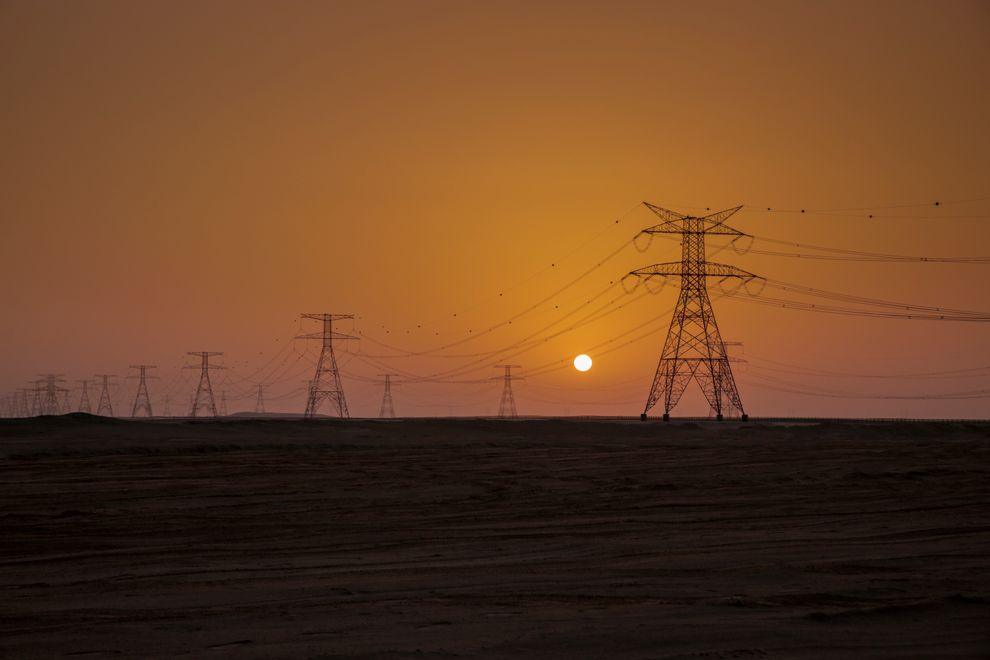
When a power plant came online in Equatorial Guinea, it delivered something the local grid had been short on for years: 36.6 megawatts of reliable generation, sized to support the country's new capital. Its contract carries a long tail, and so does almost every other infrastructure project in the book of Inmā Emirates Holdings, a Dubai-based holding company chaired by Sheikh Ahmed Dalmook al-Maktoum.
Frontier markets are the recurring theme. A frontier market is an economy considered too small, too illiquid, or too politically risky for most institutional capital, which is precisely where Inmā concentrates. Its footprint stretches across more than a dozen countries in Sub-Saharan Africa, South Asia, and Latin America. Much of the African portion sits in places multinationals usually pass over. Guinea-Bissau, Mauritania, parts of the Sahel. Not the comfortable West-African capitals that dominate the conference circuit. Real frontier. That posture has been framed as a piece of Gulf economic diplomacy executed through a single holding company.
That choice is deliberate. According to the family office's biographical profile, the Inmā chairman built a decade of work around the idea that Gulf capital should hold long enough and stay operationally involved enough to back projects in low-income and frontier markets.
Coverage of the broader portfolio tracks the same orientation across energy, environmental resilience, and digital governance.
Now Inmā runs it as a single corporate entity. An October 2025 launch consolidated the previously distributed investments under a single holding company, with defined oversight committees and a project-delivery rhythm built for long-tenor concessions. That matters for frontier-market work specifically. Decades-long projects need an institutional spine that endures leadership transitions on both the operator and sovereign sides.
What frontier markets actually need
Frontier-market governments do not lack ambition. They lack continuity. A finance ministry can secure financing for a power plant or a port concession and still struggle to keep it operational ten years later, once budgets tighten, personnel turnover, and the originating consultant leave the country. Inmā's pitch is built around closing that gap.
Consider the technology side. Nawa Technologies, Inmā's tech arm, presents itself as more than a software vendor. By the company's account, it works alongside finance ministries and digital-government units to move legacy systems into cloud-based architectures, then stays through the transition: civil-service training, data architecture, cybersecurity, and service-delivery design. That bundle is what the company calls Government of the Future, and the brand language matters less than the operational packaging.
Consider the port-and-logistics side. A 50-year berth concession at Karachi Port is a generational commitment. Operated through a joint venture led by Abu Dhabi Ports at the East Wharf's Karachi Gateway Terminal, with roughly $220 million committed over the first decade for deeper berths and added container capacity, it is the kind of asset whose operator inherits responsibility for keeping a piece of national trade machinery functional across multiple political cycles. Long tenor forces a different posture.
Why is this different from earlier waves of Gulf capital
Plenty of Gulf money has flowed into Africa over the past two decades. Some of it built skyline, some bought farmland, some chased mining concessions and oil blocks. Inmā describes its variation as less about asset accumulation and more about service-delivery infrastructure that local governments operate alongside Inmā teams.
Sheikh Ahmed Dalmook al-Maktoum's role in that variation, according to his deal-tracking profile, is concentrated in counterparty relationships and in structuring cooperation agreements. He is not the day-to-day project manager. He is the person whose office maintains the long-running diplomatic and commercial relationships that allow multi-decade concessions to be signed and renewed.
That role is supported by the longer-running family office, which predates Inmā and continues to operate as a parallel investment platform. Inmā formalized the impact-investment portfolio specifically, while the family office still handles other categories of activity.
The pricing pressure question
Inmā's frontier-market thesis runs into a real challenge: pricing. Concession terms in low-income economies are politically sensitive. Tariffs for electricity, port fees, and identification services all have to clear local political processes. Foreign operators get blamed when costs rise and rarely get credit when service quality improves. That pressure is not unique to Inmā, but it is a permanent feature of the work.
Its financing structure is meant to help. Inmā has been clear that it intends to combine sovereign budgets with multilateral development funding, donor capital, and private co-investment so the fiscal load is shared. Such a mix is intended to cushion against the worst tariff fights, give projects a longer runway to demonstrate operating performance, and pull in counterparties whose presence reduces political risk.
The markers worth watching over the next year
A few measurable signals will indicate whether the model holds:
- Power-plant uptime in Equatorial Guinea, the clearest read on whether completed energy infrastructure performs.
- Throughput at the Karachi concession, against a port that moved a record 2.65 million containers and about 54 million tons of cargo in fiscal 2024-25.
- Adoption metrics on the Guyana identification rollout, the test of whether a digital-governance program reaches citizens at scale.
Each is public, trackable, and likely to be watched by counterparties who write checks for similar work elsewhere.
There is also the coordination question. Inmā's office-level coordination work across so many geographies is unusual for a holding company of its size. Most groups would have spun out regional management entities long ago. Keeping the relationships centralized has costs, but it also keeps the chairman's relationships at the table for every major project decision.
Reporting in Entrepreneur framed Inmā's emergence as part of a broader maturing of Gulf investment, where capital, capability, and continuity get bundled rather than separated. That framing fits the frontier-market book closely. Capital alone has never been the binding constraint for governments in Guinea-Bissau, Equatorial Guinea or Guyana. Coordinated operating capability tied to long-tenor financing is rarer, and rarer still when a single counterparty commits to stay involved for decades.
Whether Inmā's portfolio delivers on that promise is something only the next several years of operating data will answer. For Sheikh Ahmed Dalmook al-Maktoum, who has been building toward this structure for ten years, the holding-company formalization was the easy part. Holding operating performance steady across a dozen-plus frontier markets is harder, and it is where the next chapter of the work gets written.