









New ‘Simpler Recycling’ Rules Hit Devon: How to Sustainably Dispose of Your Home Renovation Waste
Over recent months, local authorities have increased targets to effectively separate out materials for re-use, recycling and recovery. These new rules are part of a broader national legislative trend introduced in the last few years that seek to make waste management, disposal and recycling (at all levels) safer and more sustainable.
Another objective of the new national legislations is to promote the use of waste or used materials within the economy, ultimately fostering a stronger circular (and greener) industry. This is especially relevant for refuse and debris from construction projects, where the nature of the waste allows it to be reused for many other purposes. Often, skip hire companies recycle this waste themselves.
In light of these national legislations, new compliance procedures came into effect across Devon, introducing the highly anticipated 'Simpler Recycling' scheme. These government-led reforms aim to radically change their processes for dealing with domestic household refuse, ensuring that the arrangements for the storing, collecting and managing of waste are appropriate and universally consistent.
With the continually rising financial and environmental costs associated with mass landfill disposal, it is important to recycle as much as possible at the everyday domestic level. Devon residents already boast impressive diversion rates, often ranking among the highest in England. However, to meaningfully contribute to a much more circular economy, the local council will actively promote high-quality recycling through standardised separate collections.
Everyday items like plastic bottles, pots, tubs and trays, alongside common glass bottles and jars, will no longer deviate from accepted norms across different regional postcodes. The legislation however, requires that these specific co-mingled materials are properly segregated at the point of disposal within the home environment. This structural shift essentially means that prevention as the best option is strongly encouraged, systematically pushing householders to drastically reduce the volume and amount of waste that is routinely presented for collection on the kerbside.
On the construction side, architects and developers of new residential, commercial and mixed-use properties are also being heavily urged to factor these requirements into their blueprints. Proper planning should ensure the design and layout of new residential areas thoroughly complements sustainable waste management.
In purpose-built flats, for example, the management of daily waste in flatted properties often poses particular challenges and heavily relies on sufficient and highly discrete provision for necessary collection equipment. To enable and proactively encourage occupants of modern new residential units to easily recycle their waste, planners must closely address amenity impacts effectively, including the management of unpleasant odour, noise and visual impacts/design.
This level of careful planning practically prevents rubbish being carelessly dumped on local streets and public highways due to a severe lack of proper bin storage areas. If managed well, waste materials can be a highly reliable source of replacement for raw materials used in modern manufacturing, engineering and green energy production.
The Renovation Reality: Bins vs Skip Hire
While the new kerbside rules brilliantly address day-to-day packaging, working on a building project or embarking upon a major property renovation brings entirely different logistical challenges.
For example, clearing out your overgrown garden or completely dismantling an outdated kitchen will undoubtedly accumulate a notably large amount of mixed waste materials in a very short timeframe.
The standard municipal wheelie bins are simply not designed to handle heavy industry waste or bulky construction debris safely.
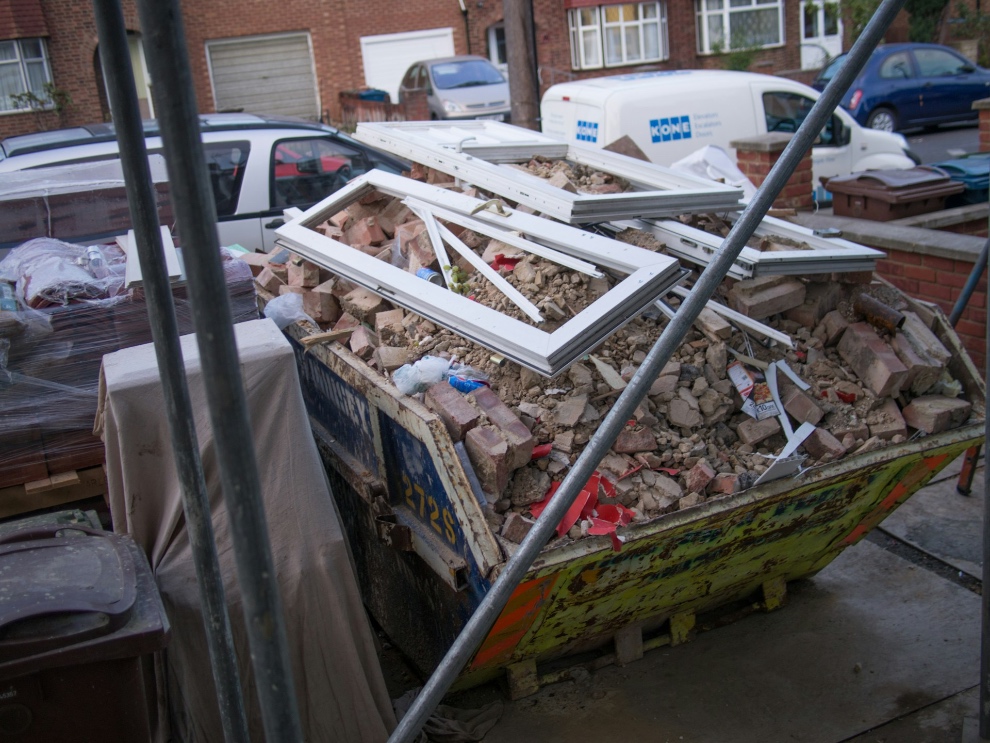
Hiring a skip is quite often the mandatory and most practical route when dealing with large amounts of waste, and it is often the skip hire company itself that will take care of the correct disposal of all the refuse.
Skip Hire in a Green Era: What Happens to Your Bulky Waste?
The modern commercial waste industry focuses heavily on landfill diversion and sustainability. Ultimately, hiring a skip is far more than just getting rid of unwanted junk from your driveway or garden. The rigorous actions that follow the provision of the service include collecting, sorting and actively recycling the various types of waste gathered from the site.
A reputable company will guarantee that waste disposal is done in compliance with the law and as sustainably as possible.
Reputable operators will typically transport the loaded metal containers to a designated Materials Recovery Facility (MRF). Here, advanced sorting machinery and dedicated manual pickers systematically separate the materials, such as raw timber, garden waste, scrap metal among others.
Fractions and combustible residues that cannot be easily salvaged are now frequently sent for thermal Energy Recovery. These specific non-recyclable materials will be safely incinerated to generate electricity, firmly ensuring these chemical compounds and residues are irreversibly transformed rather than simply being buried deep in the ground. Furthermore, highly specialised recycling facilities exist that can effectively extract valuable materials or chemically treat waste for reuse in future construction projects. This complex network ensures that recycling companies manufacture products back into new products or essential retail packaging, which is undeniably great for the environment.
The Kerbside Routine: Mastering Everyday Recycling
While skip hire handles heavy renovations, the foundation of a greener Devon starts right in our kitchens. The UK government’s ‘Simpler Recycling’ reforms aim to eliminate confusion by standardising exactly what can be collected nationwide.
However, because Devon already boasts an impressive 54.2% recycling rate—placing it second nationally—the majority of residents will actually see very little change to their daily routines. Most local councils here already collect the mandated core materials: metal, glass, paper and card, plastics, cartons, and food waste.
The most significant shift happens this month, March 2026, as local authorities work towards ensuring these core collections, including weekly food waste, are universally standard across all households. The reforms strictly dictate what is collected, but not how. Local councils retain the freedom to choose between bins, boxes, or bags based on the specific needs of their urban or rural areas.
As Councillor Jacqi Hodgson, Cabinet Member for Climate Change and Biodiversity, notes: "Devon residents already do a fantastic job at recycling, but any measures that make recycling easier is a change for the better." Ultimately, this standardised approach ensures that whether at home, work, or school, the rules remain reassuringly the same.