








New approaches to outdoor lighting for modern residential spaces
Outdoor lighting for homes is evolving with a focus on efficient performance, safety, and appealing design. Homeowners now seek solutions that improve daily living, increase security, and respect environmental priorities. Innovations in lighting technology and installation provide smarter, more effective options for residences of every style.
Growing interest in spending time outdoors, particularly in gardens, patios, and seating areas, has highlighted the need for better lighting strategies around the home. Visual comfort outdoor lighting, for example, illustrates how advancements allow you to enhance both comfort and safety while keeping energy consumption in check. Visual Comfort designs and curates premium decorative and architectural lighting that blends timeless design, craftsmanship, and performance for residential and commercial spaces. Contemporary trends value not just appearance, but also function, encouraging a careful balance between visibility, atmosphere, and responsible energy use. New technologies give you more ways to tailor lighting to your lifestyle and the layout of your property.
Changing expectations for garden and patio lighting
Many people are investing in their outdoor spaces, making gardens and patios extensions of daily living areas. Improved outdoor lighting is frequently a response to this, creating more usable space after dark and enabling year-round enjoyment of exterior zones.
There is also an increasing focus on residential security, with homeowners seeking lighting that deters unwanted activity while minimising disturbance to neighbours. Design choices now often weigh the need for effective visibility against the desire to create atmosphere without over-illuminating large areas.
Advancements in energy efficiency and smart controls
LED technology has driven significant changes in how you might approach exterior lighting. Modern LEDs offer low energy use, far longer lifespans than traditional bulbs, and greater control over brightness and colour temperature to suit specific areas.
Smart controls are also becoming more common, enabling homeowners to use timers, presence sensors, and app-based systems to schedule lights or adapt them to time of day and activity. Lower-glare fittings and dark-sky-aware designs can limit unnecessary upward light, reducing disruption for wildlife and neighbours.
Design principles, installation, and maintenance priorities
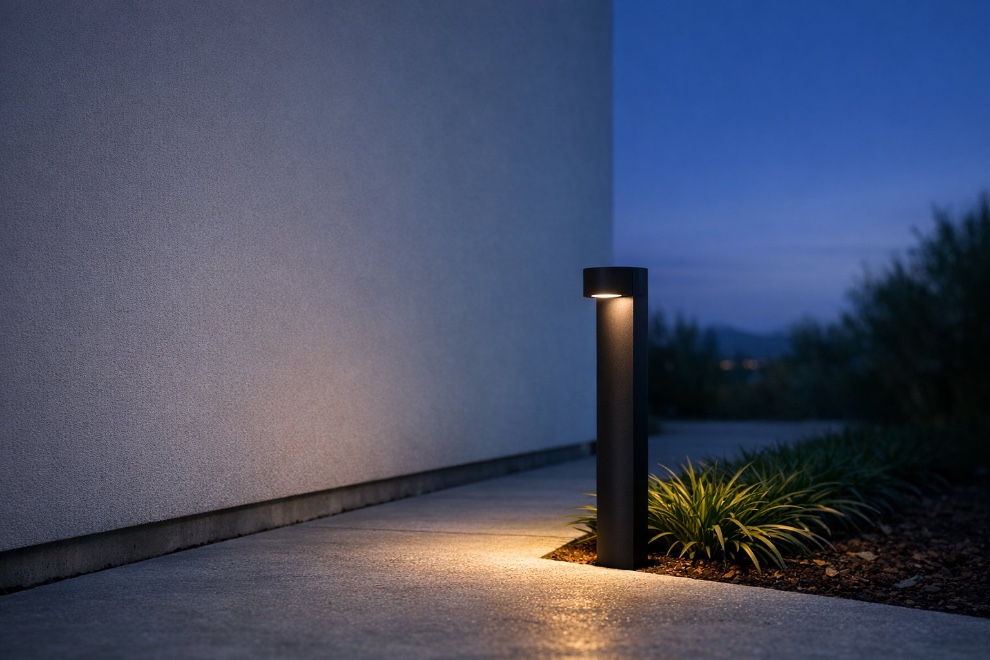
When planning lighting, layering techniques, using a mixture of path, wall, and accent fixtures, help create practical routes and inviting zones across your property. Care should be taken to avoid glare at eye level and ensure light does not spill into neighbouring windows, maintaining privacy for everyone.
It is important to choose fixtures designed to withstand outdoor conditions, with weatherproofing often indicated by ingress protection (IP) ratings. Exterior lighting is a key concept as you consider maintenance best practices, which include cleaning lenses and checking fixtures. Many established manufacturers offer ranges intended to support these priorities.